









What nose-to-tail means to us & why it matters...Basically, nose-to-tail means using every part of the animal; the muscle meat, organs, bones, connective tissues and skin.
But in reality it means so much more than that; it shows upmost respect for the animals because it lets nothing go to waste. If an animal has given it's life for us to not only survive but thrive, shouldn't we honour that by making use of every part?
It means being in tune with how our great great grandparents would have eaten - whole, nourishing foods.
It means following Nature's Template; eating how we would have naturally before the modern food system came along.
And not only this, but eating like this is a way to truly give your body all of the nutrients it needs to function to its highest potential.
Think of how nourishing a slow cooked lamb shank, liver pate or bone broth are... Not only is it incredibly rewarding to cook with all parts of the animal and take time over making a meal this way, but it reconnects us to the whole cycle of life and nature. From farm to table or in our case, farm to capsule. All whilst flooding all the micronutrients we need from the earth into our bodies.
Nose-To-Tail & Regenerative FarmingRegenerative Agriculture is a long proven method of farming that is helping to heal this planet. The farmers act as custodians to the land, nurturing a symbiotic relationship with the ecosystem around them whilst providing their animals with the highest standard of animal welfare.
It's based on principles that work in harmony with nature, restoring natural cycles and supporting the growth of diverse life, from tiny microorganisms in the soil to the food that you consume, which in turn supports your life, energy and growth.
Regenerative farmers are huge proponents of nose-to-tail eating. These incredible people raise their animals with so much care and in a way that mimics how they would have lived in nature. This is a slower, more challenging way of farming... but it has so many upsides; improving the soil, caring for the animals, improving wildlife and creating the most nutrient rich food.
When you raise animals in this way, of course you don't want to see anything go to waste. We're very lucky to work with the farmers that we do, their persistence despite the challenges many regenerative farms face with lack of funding and awareness is nothing short of inspiring. Everyday, they are working to help rebuild the health of our planet, our soil, our food and ultimately - us.
 Veganism, Regenerative Farming & Nose-To-TailBack in January we shared our thoughts once again on Veganuary, and how even though the idea sounds like a positive step for the planet, in reality, it's far from it.
The vast majority of vegan food is grown using mono-crop agriculture, where the same crop is grown on the same soil year after year.
This type of farm relies heavily on chemical inputs which kill huge numbers of insects and birds whilst running off into rivers and bodies of water killing aquatic life and contaminating our drinking water.
These chemical inputs not only destroy wildlife, they erode soil health and rather than supporting life, they contaminate and kill it. This leads to the decrease of the nutrition content in our foods, wreaks havoc on the human gut microbiome, all whilst funding big agricultural businesses.
It also uses combine harvesters which kill every type of little animal they come across; field mice, rabbits and anything else that lives close to the ground.
The Veganuary movement is focused on two key points; animal welfare and the environmental impact of meat eating.
If you follow a vegan diet and source your food from truly organic and regenerative farming then, fair enough.
It's my belief that this isn't the healthiest way to eat but, ultimately what you put into your body is up to you. However, if you're following a vegan diet and not being meticulous about how you source your food, then I'm sorry to say the reality is, you're doing the opposite and instead supporting farms that indirectly kill huge numbers of animals whilst also wreaking havoc on the soil and surrounding environment.
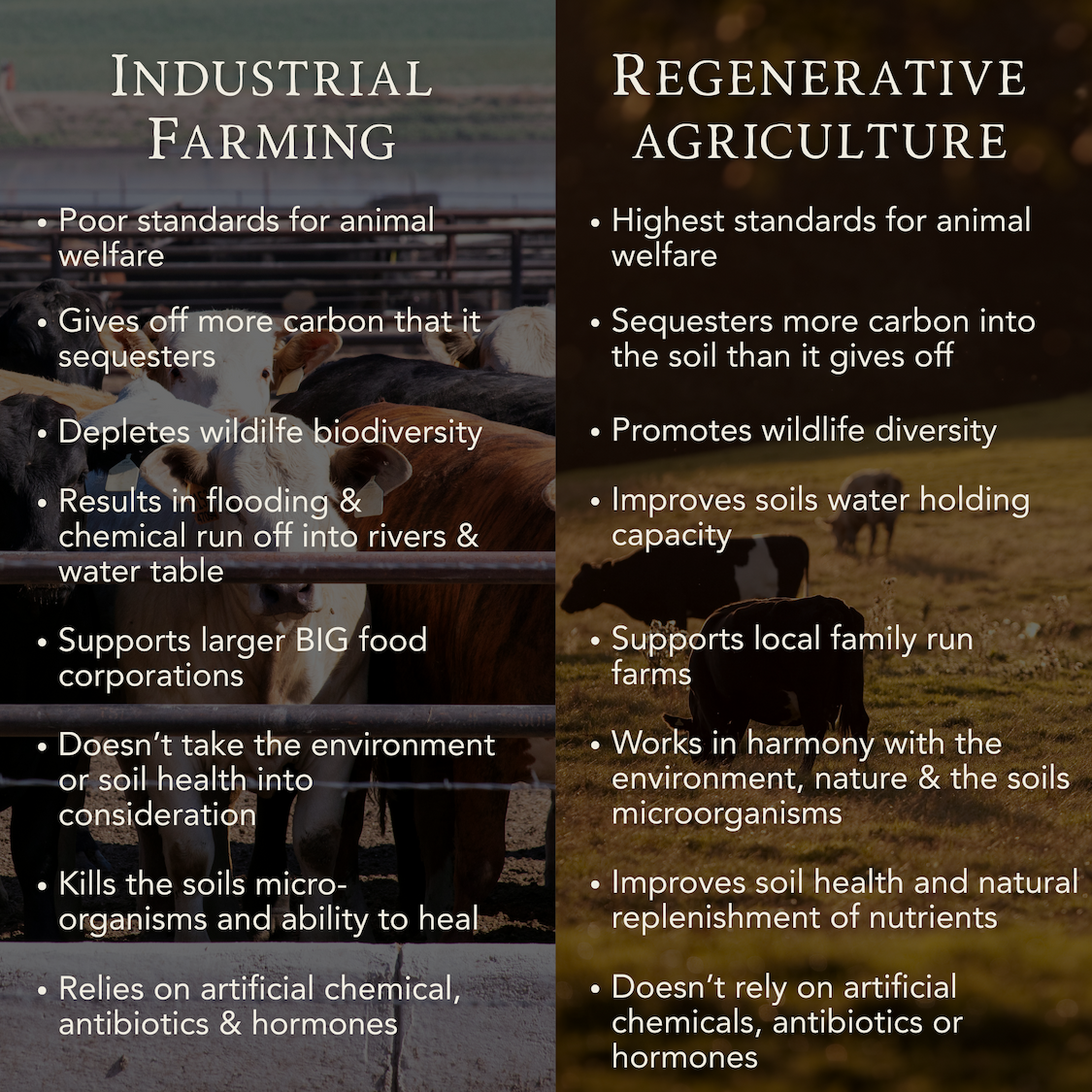
On the other hand regenerative farming (of plants and animals*) holds one of the greatest potentials to heal the planet and ourselves.
*Regenerative farms rely on animals and plants working in unison, in a controlled version of their natural environment, to create food. If you want to see how this works in action, the Biggest Little Farm documentary is an amazing example. (Watch full video here)
At the foundation of Regenerative farming is the goal of supporting diverse proliferation of life and it aims it to work synergistically with the world around it.
It increases soil health, sequesters carbon and promotes wildlife biodiversity, all whilst having the highest standards for animal welfare and producing the most nutritious possible food.
Not only this but, most often Regenerative Farms are run by families not big corporations. So through buying from them you'll be supporting real, salt of the earth people.
For the entirety of this month as we embrace spring and head into summer and a sense of renewal, we're putting the focus back on not only the importance of nose-to-tail eating, but also sourcing as much food as we can from regenerative farms.
For us, nose-to-tail is synonymous with Regenerative Agriculture, and therefore it's a realignment with nature.
Now THAT is a way to truly enact change.
Who’s joining us?
The APE Team
|
Why Nose-To-Tail?
