












Our nutritional needs shift at every stage of life. Is your teenager getting what they need?
If you’ve read our blogs on Nose-To-Tail For Kids, Men’s Health Pt 1 and Women’s Health Pt 1, you’ll know that depending upon our age, genetics, environment and lifestyle, we may all have different key nutrients we need to focus on to thrive. Knowing exactly which nutrients you need to boost requires a little investigation and testing, however when it comes to teenagers, there are specific vitamins and minerals that are absolutely vital across the board.
Why Optimal Nutrition Is Vital For Teenagers
If you have teenagers, you’ll know they have a lot to deal with. But other than the challenges of navigating a world of social media, body image and education, the body and brain of a teenager is undergoing some of the fastest and most complex development since early childhood. Growth spurts – which often happen ‘unevenly’ across the body, leading to issues with coordination – are accompanied by increases in muscle mass and bone density. The metabolism changes, as do sleep rhythms, and the brain is constantly creating new neural pathways and ‘pruning’ unused ones. This essentially means that learning is highly efficient, but the experiences we have as teenagers can go on to deeply affect us later in life.
If that wasn’t enough, during adolescence, hormones act as the main drivers of physical, emotional, and brain development. Gonadotropin-Releasing Hormone (GnRH) is the first major signal from the brain that tells the pituitary gland to begin puberty. (usually ages 8-13 in girls, and 9-14 in boys). Luteinizing Hormone (LH) & Follicle-Stimulating Hormone (FSH) lead to the production of sex hormones, whilst estrogen supports female development, and testosterone supports male development.
Teenagers are adaptable, capable and have the potential to be incredibly healthy, yet due to the plethora of changes evolving within their bodies, they’re also highly susceptible to stress, sleep deprivation, mental health challenges and nutritional deficiencies. If your teen is up for it, this could be the key moment in their lives where they choose a path of deep nourishment and vitality, contributing to life-long health and wellbeing. It may just take a little encouragement…
Key takeaways:
In teenage years, the body and brain undergo the fastest and most complex development since early childhood. Hormones trigger the onset of puberty and body development, and whilst they’re adaptable, teenagers are more susceptible to mental health challenges, stress and nutritional deficiencies.
How the modern world is wrecking teenage health
Whilst we’re on the subject of optimising teenage development, it’s important to know exactly why supporting teenagers is more important than ever today. This is because our world has never been flooded with more hormonal disruptors, leading to problems with hormonal balance, development and future fertility. Here’s a brief guide to what’s contributing to issues with teenage hormone health today, and what we can do to prevent it:
- Blue light: Excessive blue light emitted from screens has a huge impact on hormonal health, one of the most powerful being suppression of melatonin, the ‘sleep hormone’. If a teenager uses their phone late into the night, the light emitted from the screen suppresses this vital hormone, which in turn impacts circadian rhythms, the ability to achieve deep and restorative sleep, as well as suppressing the release of growth hormone. Not only that; early research suggests a potential link between excessive blue light exposure and altered reproductive hormone levels, which could increase the risk of earlier onset of puberty. Bright light later into the night can also elicit mood changes and metabolic issues.
What to do: Use blue light blocking glasses, set boundaries with smart phones, use red screen shortcuts to reduce blue light exposure.
- Self-care products: Most mainstream self-care products from body wash to shampoo and makeup are loaded with endocrine disruptors, which can interfere with the body’s hormonal systems, potentially leading to lower levels of important hormones like testosterone and higher levels of estrogen in both boys and girls.
What to do: Switch to natural self-care products or those without phalates, parabens, triclosan, BPA, aluminium and PFAS.
- Poor dietary choices: Research across the UK shows a large portion of a typical teenager’s diet consists of sweet and savoury snacks, ultra processed foods, sugary drinks and little fresh produce. More teenagers have also been influenced to adopt plant-based diets today, which as we’ll discuss, can often lead to low levels of essential nutrients for developing brains and bodies.
What do to: Encourage more whole foods, ensure adequate intake of high quality animal products. Supplement with Beef Organs if consumption of animal products is low.
Key takeaways:
Excessive blue light exposure, use of chemical-laden self-care products and poor dietary choices all disrupt teenage development and hormonal balance. Avoiding excessive screen use (especially at night), switching to natural skincare and using our guide to make optimal nutritional choices can all make a huge impact on their wellbeing.
Essential Nutrients For Teenagers (and the best sources)
Teenagers grow fast – physically, mentally and hormonally – so their nutrient needs are especially high. The most important nutrients for teenagers include:
Calcium: Supports bone development and strong teeth. Up to 90% of peak bone mass forms in teen years.
Best sources: Milk, yoghurt, cheese, sardines, sesame seeds, leafy greens.
Our top bone-supporting supplements: Whole Bone Matrix, Collagen, Colostrum
Vitamin D: Aids calcium absorption and immunity
Best sources: Sunlight, sardines, mackerel, salmon, liver
Our top supplements for calcium absorption and immunity: Colostrum, Whole Bone Matrix
Iron: Needed for oxygen transport and energy, especially for teenage girls due to menstruation.
Best sources: Red meat, chicken, fish, liver, eggs
Our top supplements for iron levels: Beef spleen, Beef Liver
Zinc: Supports growth, immunity and hormonal balance
Best Sources: Red meat, shellfish, dairy, pumpkin seeds, almonds
Our top supplement for zinc: Celtic Oysters
Omega 3s: Brain development, mood regulation, heart health
Best sources: Oily fish, flaxseeds, chia seeds, walnuts
Our top supplements for omega 3s: Beef Brain, Celtic Oysters
B vitamins (especially B6, B9 and B12): Energy production, brain function, red blood cell formation
Best sources: Red meat, eggs, dairy, lentils and beans
Our top supplements for B vitamins: Beef Organs, Beef Liver, Celtic Oysters
Protein: Supports growth, muscle development, hormone production and immunity
Best sources: Eggs, chicken, fish, meat, beans, lentils
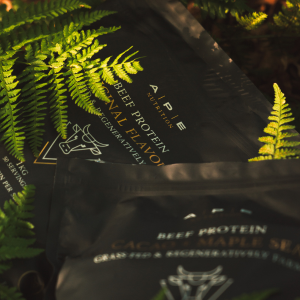
Our top supplement for protein: Grass Fed Beef Protein
Specific Brain-supporting mushrooms
Why: Studying, learning, dealing with mood changes and shifts in sleep patterns all require the brain to work over-time, meaning it needs all the support it can get. The teenage brain is also not fully developed until mid-20s, and is still growing.
Best source: Organic Lions mane
A note on dosing for teenagers:
Depending upon the age and size of your teen, dosages of our products can vary. We recommend starting with half of an adult dose for any supplement, and gradually increasing depending upon their needs and size.
Key takeaways
Teenagers need plenty of nutrition to support their rapid growth and development, especially from calcium, vitamin D, iron, zinc, omega 3s, B vitamins and protein. We recommend supplementing with our products with half of an adult dose and increasing as your teen grows.